|
Frank Williams had ambitions to be a racing driver, and he was part of the 'Formula Three circus' of the late 1960s. To support his racing, he 'wheeled and dealed' in second-hand racing cars.
Eventually it dawned on Frank that he was going nowhere as a driver, but he couldn't let go of motor racing. He therefore became an entrant and, in 1968, ran his close friend, Piers Courage, in a Formula Two Brabham.
The role of entrant suited him, he enjoyed wheeling and dealing and, being a perfectionist, his car was always immaculate. In 1969, he ran Courage in Formula One, again in a Brabham, and the little team was rewarded with three second places.
These performances established Williams as a serious player and for 1970 he landed a deal to run what was, in essence, a works team for de Tomaso. The car wasn't special, but the long-term prospects looked promising. Then Piers Courage was killed in the Dutch GP. After that, de Tomaso lost interest and though the team continued to the end of the season, it was merely going through the motions.
For Frank Williams, it was a devastating blow. Piers had been his best friend, yet he had to soldier on. The deep personal loss Williams felt coloured his relationship with every subsequent driver he employed.
At the end of the season, de Tomaso withdrew and Williams spent 1971 as a private entrant running March 711s. During the season Frank made plans to be a constructor and between 1972 and 1975 he ran his own team which was often publicly known by the name of the sponsor. Money was a constant worry and people who worked for him never knew when they arrived at work whether even their drawing boards would be in place, or had been seized by the bailiffs. Frank was even forced to sell the carpets from his house and, the most bitter blow, his beloved Porsche 911.
During those four seasons, Williams scored only 12 points, and half of those came when Jacques Lafitte inherited second place at the 1975 German GP. In the pit-lane, Frank was known as 'Wanker' Williams.
In late 1975, Walter Wolf bought some of the assets of the defunct Hesketh team, and 60% of Williams. The new Wolf-Williams team ran Hesketh 308Cs, renamed FW05s, and they proved disastrous. Before the end of the season, Williams left and took the number two designer, Patrick Head with him.
During 1977, while Patrick settled down to design a new car, Frank ran paying drivers in a second-hand March 761. Then he pulled off a coup, by landing substantial sponsorship from Saudi Arabia. In typical Williams fashion, he had a car painted appropriately, trailed it to London and parked it outside the hotel where he was making his pitch. He had no need to speak in abstract terms, the car was outside the front door.
From that moment a new Williams team emerged. A single car, for Alan Jones, was run in 1978, and Jones was only chosen because he was available and inexpensive. Frank thought that he was no more than a midfield runner, but Jones had other ideas. Though he scored points only three times, with a second place among them, he was a front runner all season. In the year of ground effect, Williams was frequently the top DFV car behind the Lotuses.
In 1979, the Williams FW07, a ground effect car, struggled at first and then became the class of the field. Its first win was at Silverstone and then it won three of the remaining six rounds. From being a joke in the pit-lane, Williams became a leading player, able to attract big money sponsors and the best drivers and technicians. In 1983, Williams entered a partnership with Honda, the first of several partnerships with major manufacturers.
By the beginning of the 1986 season, Williams had won 23 Grands Prix, and two Drivers' and two Constructors' Championships. Driving to the airport after a test session in France, Frank crashed his car and was terribly injured. His life hung in the balance and he emerged a quadriplegic, paralysed from the chest down.
That would have wrecked most men, and most teams, but Frank demonstrated the steely determination which had carried him through years of struggle. Further, he had built a team so strong that it could cope with his absence. Indeed, that year Williams won the Constructors' Championship and Nigel Mansell came within a burst tyre of taking the drivers' title.
A second Constructors' Championship for Williams-Honda followed in 1987, and Nelson Piquet took the Drivers' Championship. Despite this, Honda withdrew its engines and provided them to McLaren instead. The most probable reason is that Honda did not believe that Frank Williams could continue to deliver the goods while being confined to a wheelchair.
There followed a year when Williams had to use customer Judd V8 engines, with predictable lack of success, but then the team announced a deal with Renault. It was to be a long-lived and hugely successful partnership.
The key to the team's success has been the enduring partnership between Frank Williams and Patrick Head, which has no parallel in the history of Formula One. As a designer, Patrick has shown a rare ability to keep his feet firmly on the ground, yet allow his imagination full reign. Further, he gathered around him a team of engineers of like mind, capable of exploring new avenues.
Until such devices were banned at the end of 1993 Williams set the standard in areas such as active suspension. Under Adrian Newey, the team's aerodynamic package was also second to none. By the end of 1997, Williams had won 103 Grands Prix, taken pole position 107 times, had won nine Constructors' Championship, and had provided the wherewithal for drivers to take their championship on seven occasions.
That last statement is phrased carefully because Williams regards the Constructors' Championship as paramount. Indeed, the team's record with its treatment of drivers has been uneven. Nelson Piquet, Nigel Mansell, Alain Prost and Damon Hill all left Williams amid varying degrees of acrimony immediately after winning the title and there are other instances of drivers not flourishing at the team. Halfway into his first season, 1997, Heinz-Harald Frentzen had the threat of the sack hanging over him and it has to be said that he did not look at all special. Come 1999 and Frentzen, driving for Jordan, was a man transformed, meanwhile Alessandro Zanardi, who had taken Frentzen's place at Williams, saw his career fall to pieces.
Williams' great partnership with Renault came to an end after 1997 and for the next two years, the team had to fall back on Supertec customer engines, which saw it slip down the grid. The team also lost the services of its brilliant Chief Designer, Adrian Newey (Patrick Head is Technical Director). Newey wanted a share in the company to secure his long-term commitment since he was being beguiled by other, very lucrative, offers. Frank Williams refused and Newey went to McLaren and McLaren straight away won two drivers' championships and the 1998 Constructors' Championship.
It must remain a matter of speculation how much Williams comparative decline, 1998-9, was due to having to use customer engines and losing its chief designer to one of its main rivals.
During 1999, Sir Frank Williams - a knighthood richly deserved - announced that his team was to enter a partnership with BMW from the beginning of 2000. With affecting modesty, both parties played down the possibility of success in the short-term, but it is clear that this was a partnership which was intended to last.
In 2000 Jenson Button and Ralf Schumacher re-established Williams at the front end of the grid whilst Juan Pablo Montoya's arrival to partner Schumacher for 2001 created what many saw as the F1 'dream team'.
Wins for Ralf in San Marino, Canada and Germany in addition to Juan Pablo's superb victory at Monza, gave the Grove outfit third place in the World Championship, albeit more than twenty points behind McLaren which also won four GPs.
Unfortunately, poor reliability - 16 finishes from 34 starts - particularly from the BMW power-plant, meant that neither Ralf nor Juan Pablo was able to get the best out of the FW23.
Although it finished runner-up to Ferrari in the 2002 Constructors' Championship, the Grove outfit was never able to mount a serious challenge for the title. A superb win for Ralf Schumacher at Sepang, the second round of the championship, offered hope, but after that the red cars merely headed off into the distance.
Patrick Head said that in Ralf and Juan Pablo Montoya WilliamsF1 had the best driver pairing, and he was probably right. Ralf, the German, was analytical and thorough while Juan Pablo, the Latin, was an out-and-out racer.
In 2002 the BMW power-plant was without doubt the class of the field, unfortunately the FW24 couldn't do it justice, while Michelin's wets, and to a certain extent its intermediates, were no match for Ferrari's Bridgestones.
2003 almost got off to a perfect start for WilliamsF1 when Juan Pablo Montoya appeared to be heading for victory at Melbourne, however an unforced error caused the Colombian to hand the lead, and victory, to David Coulthard in the McLaren.
Over the next couple of races it was evident that the FW25 was not a title winner causing BMW Motorsport director Gerhard Berger to publicly criticise the team and suggest his company either build its own car or seek an alternative partner.
Rather than get rattled Williams and Head kicked the relevant backsides resulting in a dramatic mid-season resurrection which saw the team taking both titles almost down to the wire.
Juan Pablo's determined win in Monaco - resulting in a standing ovation in the press room - began a sequence of six races in which the white and blue cars finished either first or second.
Following a crash during testing at Monza, Ralf was unable to compete in the Italian GP, though his replacement Marc Gene drove a solid race to finish fifth. Having scored in the first ten races the German's championship hopes fell apart in the second half of the season with just five points from five outings.
On the other hand Juan Pablo Montoya's season got off to a weak start - other than second in Melbourne - but got better as the season progressed, the Colombian going to Indianapolis with the title well within his grasp. Unfortunately a Ferrari revival combined with poor weather and over-zealous stewarding meant the former Indy 500 winner's dream was at an end, while a hydraulics failure two weeks later meant he was unable even to take runner-up spot.
The off-season was dominated by the news that Montoya was heading to McLaren for 2005 prompting many to question how the relationship in 2004 would progress. There were rumours that the team might drop the Colombian early just as there were rumours that McLaren wanted him sooner rather than later.
On January 5 the radical looking WilliamsF1 BMW FW26 was unveiled and at the same time Montoya revealed that he was staying with the team for 2004 and was fully committed to handing team boss Frank Williams the title before heading to Woking.
In Ralf and Juan Pablo, WilliamsF1 still had an exciting line-up, certainly one of the most intriguing in F1. Add this to the exciting new FW26 and we thought we might be in for something special.
WilliamsF1 always knew 2004 wasn't going to be easy. It was already known that Juan Pablo Montoya was already committed to McLaren in 2005, with many, including Pitpass, convinced that the Colombian wouldn't drive for the Grove outfit in 2004.
However, at the January launch of the team's 2005 contender, there was Juan Pablo, as large as life, alongside the radical 'hammer-head' FW26.
Let's face it had the nose been successful, pretty soon all the other cars would have been sporting something similar. However, it wasn't, and they didn't.
WilliamsF1, like everyone else, was caught completely off guard by the pace of the Ferraris in Melbourne. However, things were going to get worse before they got better.
Hardly had the season begun, than rumours concerning Ralf Schumacher began to circulate, it was said that the German was heading to Toyota in 2005.
Despite finishing 4th and 5th in Australia, and second in Malaysia (Montoya), the FW26 flattered to deceive. In spite of the strength and power of the BMW power-plant, the car was no winner.
Behind the scenes, much was happening, with BMW rumoured to be keen on seeing WilliamsF1 given a younger, fresher outlook. Consequently it came as no surprise when Patrick Head was moved sideways and replaced, as technical director, by Sam Michael.
The Australian's first weeks in the job were a nightmare, with both drivers disqualified in Canada, and Montoya black-flagged a week later at Indianapolis. However, Montoya's 'disqualification' was the least of the team's problems at the 'Brickyard', for Schumacher was involved in a horrific accident which left him sidelined for the next six races.
Marc Gene and Antonio Pizzonia deputised for the German as the team began an amazing fight back, spurred on by the fact that BAR and Renault were the only teams giving Ferrari anything like a run for its money.
First off, the team ditched its radical nose, with chief aerodynamicist, Antonia Terzi, resigning her position shortly afterwards.
By the time Schumacher returned to the cockpit there were serious doubts as to whether his heart was still in it, after all, this was his second serious crash in under twelve months. However a strong second in Japan silenced the critics, while Juan Pablo's dominant win in Brazil was proof of what might have been, and a nice farewell to the team after a difficult season.
On paper, the team's season doesn't look that bad, having finished fourth, almost twenty points ahead of McLaren. However, four podiums is one of WilliamsF1's worst showings for many years.
Yet, WilliamsF1 wasn't only experiencing problems on-track, having spent much of the summer embroiled in the 'Buttongate' saga, which was eventually decided in BAR's favour.
For 2005 it was all-change with Montoya and Schumacher making way for Mark Webber and Nick Heidfeld, two drivers who had yet to spend time in a truly competitive F1 car. Antonio Pizzonia was retained as test driver, but was clearly miffed at losing out on the race seat to the German.
It might have been all-change as far as the drivers were concerned, however, the relationship between WilliamsF1 and BMW remained as difficult as ever.
If the FW27 wasn't a very good car, and it wasn't, let's be honest and say that the BMW P84/5 wasn't the best engine, not by a long way.
At Grove, Antonia Terzi had been replaced by Loic Bigois, while (chief designer) Gavin Fisher and (windtunnel guru) John Davis were also to depart.
Early in its 2005 campaign, WilliamsF1 suffered a massive blow when it learned that its windtunnel was giving the wrong information - hardly the sort of news that any F1 team wants to hear. Sam Michael worked valiantly and by the end of the season there were clear signs of improvement.
BMW was caught out by the new engine regulations, and consequently ran with a modified version of the 2004 engine (P83), having to abandon its planned 'new' motor, which was unlikely to meet with the new rules. Another area where the FW27 lost out (badly) was its traction control, both drivers missing out on what might have been good results due to poor starts.
Then there was the break up of the marriage, as Frank Williams, Patrick Head and Mario Theissen made their feelings public, and how.
It came as no surprise therefore when BMW announced that it was buying Sauber and starting its own F1 team, leaving WilliamsF1 a year ahead of schedule. When the British team announced a one-year deal with Cosworth, F1 sceptics smiled and suggested the writing was on the wall.
Finally there was the energy the team was forced to waste on the second successive summer of 'the Button contract saga', a (seemingly) annual game whereby the English driver attempted to wriggle out of his contract, blaming everyone but himself. Eventually it was settled, with Button remaining at Honda, and WilliamsF1 pocketing a sizeable cheque in lieu of compensation.
On track, the drivers, for the most part, did the best they could, though Webber all too often allowed his frustration to get the better of him. Heidfeld gave the team its best results of the season, successive seconds in Monaco and Europe, and the team's only pole position (Europe), before a crash during testing at Monza, and a subsequent bicycle accident, ruled him out for the remainder of the season. The German was replaced by Antonio Pizzonia, who failed to make a real impression.
The team headed into 2006 determined to prove that there was life after BMW, and though the FW28 was fitted with a Cosworth there was already talk of a Toyota deal for 2007.
Days before the launch of the 2006 car Williams shocked the F1 worlds when it announced that it had lured Alex Wurz away from McLaren, leading to speculation that the Austrian was being lined up for a race seat in 2007.
Webber was retained while Heidfeld headed off to BMW, never having sat in a Williams again after the Monza crash. Though many believed the German manufacturer would attempt to prise Nico Rosberg away - after all he was German and had made his name in Formula BMW - he remained to partner Webber, thereby creating one of the most intriguing driver line-ups on the grid.
The season got off to the best possible start with both drivers scoring points and Rosberg posting the fastest lap. After that, it was pretty much downhill.
What could go wrong did go wrong, and the season - Williams worst since 1978 - was best summed up by Patrick Head, who, at the launch of the 2007 car, admitted that he and Frank were "ashamed" of their team's performance the previous year.
Reliability was dreadful, with the team completing just 58% of the laps that comprised the 2006 championship, and Head admits that the team wasted time on an overly complex gearbox.
For the most part the drivers did their best, but whenever they appeared capable of grabbing a result something would go wrong, most notably at Monaco, when Webber, heading for a sure fire third place, suffered a cracked exhaust collector which leaked hot gasses onto a wiring loom.
In July, the British team confirmed that it would be running Toyota powerplants in 2007, though this was not enough to prevent Webber announcing that he was jumping ship to Red Bull.
The season was pretty well summed up at Interlagos, the final race, when Nico ran into the back of his teammate on the first lap. It had been an Annus Horribilis for the Grove outfit, and nobody within the team was sorry to see the year come to a close.
Ahead of the 2007 season there was a major reshuffle, with Jon Tomlinson recruited from Renault as head of aerodynamics, along with Rod Nelson (chief operations engineer) and John Russell. The team had a new title sponsor in the form of AT&T and the promise of a strong working relationship with Toyota.
Rosberg was retained, with Alex Wurz returning to a full race seat for the first time since 2000. Narain Karthikeyan was promoted to the role of test and reserve driver, while Kazuki Nakajima, a product of the Toyota Young Driver Programme, got the second test seat.
Though Williams was never in a position to mix it with BMW in 2007, far less McLaren and Ferrari, it pretty much dominated the mid-field, despite finishing eighteen points behind 2006 champions Renault.
Certainly, there was little in 2007 for Frank and Patrick to be ashamed of. Retirement was much improved, which allowed the drivers, and in particular Rosberg, to flourish.
In pre-season testing it was clear that the FW29 was reliable, certainly when compared to its predecessor, and this, combined with the constant development, mostly aero, paid off in Melbourne when Rosberg qualified twelfth and finished seventh.
Sadly, reliability wasn't 100%, and in both Malaysia and the United States the German retired whilst running sixth.
The switch to Toyota powerplants also helped, with the Grove outfit regularly out-performing its Japanese supplier. Furthermore, Williams didn't suffer nearly so much as some of its rivals as it switched to Bridgestone rubber.
Although Wurz was to score the team's best result of the season - third in Canada - he was mostly out-performed, particularly in qualifying, by his German teammate. In only his second season, Rosberg showed remarkable maturity.
Ahead of the Japanese GP, Williams was just eleven points behind the 2006 champions, however, an electronics problem for Rosberg, coupled with a double-points finish by the French team, ensured there were no major upsets. That said, while Renault was unable to add any further points to its tally, Williams picked up another five in Brazil.
According to Sam Michael, it was the outright pace of the FW29 which prevented it achieving even greater success, however, the bottom line is that following the shame of 2006, Williams bounced back with a convincing fourth place in 2007. That said, Michael was first to admit that in reality the team finished fifth, only being promoted following the exclusion from McLaren as a result of the Spygate scandal.
Nobody is entirely sure why Alex Wurz decided to retire from racing just days ahead of the season finale, however, following a comparatively lacklustre season it didn't come as too big a surprise. What did come as a surprise though was when the Austrian announced, just a couple of months later, that he was heading to Honda as test driver.
For the final race, Kazuki Nakajima was given the job of partnering Rosberg, and other than a botched a pit-stop, which saw him knock down one of his pit crew, he gave a good account of himself, bringing the car home in tenth.
What wasn't widely publicised is that for much of 2007, Williams ran its gearbox under the 2008 rules, in other words running the boxes for four races. With no failures, this appeared to bode well for the new season.
Despite offers from McLaren, Rosberg remained with the Grove outfit for a third season, with Nakajima continuing as his teammate, and former Formula BMW and A1 GP sensation Nico Hulkenberg being brought in as test driver.
2008 was an important milestone in the Grove outfit's history, for over the course of the season the team would celebrate thirty years of racing, its five hundredth Grand Prix and Frank Williams six hundredth race as an entrant. By season end however, there was precious little else to celebrate.
Though the FW30 was an improvement on the FW29, it was clearly less competitive in terms of the opposition. There were a number of significant improvements, including a more effective diffuser and an efficient radiator cooling package. However, while the Grove team enjoyed an advantage in 2007 in terms of its damper system, by 2008 the opposition had caught up.
The FW30 was dreadfully inconsistent, fairly competitive at some tracks, woeful at others. Fast corner tracks where an efficient high-speed aero package was vital saw the car struggle, whereas it was fairly competitive on the slower tracks which required good traction. Much like the Ferrari and Toyota, the FW30 was at its best when an aggressive tyre choice was required.
Development was compromised not only by money, or the lack of it, but by the fact the Grove outfit insisted on looking ahead to 2009. Had more of the team's resources been put into developing the FW30, team insiders insist that Williams could have achieved more in 2008, however, they weren't and they didn't.
For much of the season, both drivers gave a good account of themselves, with Rosberg getting the year off to a great start in Melbourne. However, an almost certain sixth in Spain was lost courtesy of an engine failure, while in Canada, Rosberg had his own moment of pitlane madness, running into the back of Lewis Hamilton who had already eliminated Kimi Raikkonen. For this error the German was handed a ten-place grid penalty for the following race (France).
In Singapore, Rosberg took a fine second place, having led a Grand Prix for the first time in his career. This was in spite of a ten-second penalty given to him (and Robert Kubica) for pitting while the pitlane was closed.
Kazuki Nakajima scored a fine sixth in Melbourne, benefiting from the disqualification of Rubens Barrichello, and seventh in Spain, having out-qualified his teammate. Despite a silly incident in Turkey, Kazuki went on to become the first Japanese driver to score a World Championship point in Monaco.
Over the course of the season, the FW30 was reliable, the drivers only failing to finish four times, however, it simply wasn't competitive. Toyota provided a good engine, which only once let the team down, therefore it was a fact of life that the weak part of the package was the FW30.
Sadly, however, Williams problems weren't confined to the race track. Already clearly struggling, certainly compared to those teams backed by car manufacturers and billionaires, Williams took a major hit as a result of the global financial crisis, with sponsors Royal Bank of Scotland (RBS) and Baugur both particularly badly affected. Furthermore, ahead of the start of the 2009 season, the British team was to lose two further sponsors, Lenovo and Petrobras.
When, in December 2008, Honda announced that it was withdrawing from F1, citing the global crisis, it was only natural that all eyes turned to Williams, the last of the true independents. While the good people at Grove continued to insist that all was well, the rest of us kept our fingers crossed, for if Honda couldn't take the pain how could an independent?
In 2009, money issues aside, Williams appeared to work hard to maintain its newfound reputation as the grumpy old man of the pitlane, objecting to all manner of issues be they technical or sporting. Ironically, however, the Grove outfit was one of just three teams to suss that double diffusers were within the legality the regulations if the not the spirit and therefore started the season with a slight advantage - though the single diffuser Red Bull was quicker from the outset.
While the FW31 wasn't a bad car, it certainly wasn't any great shakes and though the Grove team worked hard throughout the season in an attempt to keep in touch with the front runners the team was to lose ground following late improvements from McLaren, Ferrari, Toyota and BMW which subsequently demoted it to seventh.
The situation at Grove wasn't helped by the fact that the team continued parallel KERS programmes, one the conventional battery type the other a less conventional flywheel system. Sadly, due to lack of money the team eventually had to make a choice and opted to pour its remaining dosh into its aero development.
Excellent reliability saw the team complete 92% of the racing laps over the course of the season, however, for the most part, only one of the team's drivers was able to convert this into results. Nico Rosberg arguably had one of his best seasons scoring points in 11 races and earning all of the team's 34.5 points. Had Kazuki Nakajima been able to contribute just a few the team might well have managed to hold off BMW for sixth place in the Constructors' Championship. That said, the Japanese driver was much closer to his teammate - in terms of performance - than in 2008 and therefore this might say something about the general reliability and competitiveness of the 2009 grid.
A steady run of performances between Monaco and Valencia saw Rosberg pick up 25 points, while the German was cruelly robbed of an almost certain second in Singapore when he was given a drive-through for crossing the white line at the end of the pitlane.
In the latter stages of the season, following BMW's shock announcement that it was to leave the sport, attention turned to Toyota. Sure enough, on October 14, Williams announced that it was to end its engine supply contract with the Japanese manufacturer at the end of the season, the announcement an obvious precursor to Toyota's own withdrawal from the sport which was officially announced on November 4.
A couple of days prior to Toyota's announcement, on October 30, Williams announced that it had secured a deal to run Cosworth powerplants in 2010, the Grove outfit reverting to the same engine supplier it had used on its F1 debut back in the early 70s and also in 2006, the season in which Cosworth had last supplied F1 engines.
It came as no surprise that Nakajima followed Toyota out of Grove, while it was also clear that the team could no longer hold on to Rosberg who subsequently headed to Mercedes.
Consequently, for the new season it was an all-new driver line-up with Rubens Barrichello being partnered by German hot-shot and reigning GP2 champion Nico Hulkenberg.
Despite the added work involved in switching engine suppliers, out of the box the FW32 wasn't too bad, better than the much-anticipated Force India and even a little better than the Renault. While Force India had slipped behind by Valencia, Renault, which had its F-duct in place by Hungary, lefts its Grove rival pretty much for dust in the second half of the season.
The team opted for a shorter gearbox and wheelbase, thereby compromising diffuser performance, while it was also the only Cosworth customer that opted to build its own gearbox hydraulics.
An aero upgrade at Barcelona proved somewhat ineffective, the Grove outfit now beginning to lose out as rivals introduced their versions of the F-duct. In terms of the blown diffuser, Williams had actually led the way with its development however, it opted not to use it from the start of the season because it didn't have the capacity to build different exhaust layouts. When the team finally ran the device (at Valencia) it was trouble free and effective, and by Silverstone it was clearly making a real difference.
Rubens Barrichello proved to be an inspiration, other than making the most of his vast experience on-track, the Brazilian was able to assist the team with its aerodynamic development and even provide Cosworth with essential feedback.
It was noticeable that the FW32 tended to perform better in the early stages of the weekend, especially on the green tracks, however, as the weekend wore on the car would become less balanced.
While Barrichello scored points in the first two races of the season, Nico didn't open his account until Malaysia. There followed a somewhat barren run for the Grove team until Valencia, when the updates helped the Brazilian to fourth and fifth a couple of weeks later at Silverstone.
Both drivers struggled in qualifying, certainly in the early stages of the season. However, from Valencia things improved, with Hulkenberg's against all odds performance in Brazil giving the team its first pole since the Nurburgring 2005. While the youngster was unable to convert this into a win, or even a podium, the four points he won for finishing eighth helped the Grove outfit leapfrog Force India to take sixth in the Constructors' Championship.
It makes perfect sense that the team should choose to retain Barrichello for 2011, the Brazilian enjoying an Indian Summer in terms of his career. Ironically, Riccardo Patrese enjoyed a somewhat similar revival in the early 90s, also with Williams. How nice if Barrichello could emulate the Italian and score a win or two, even a few podiums.
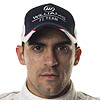
While Hulkenberg didn't quite live up to expectations, he had his moments, especially his pole in Brazil. However, for reasons known only to themselves, the team opted to let him go in favour of GP2 champion Pastor Maldonado. While the Venezuelan brought much needed money, one could not help but feel that he made hard work of winning the GP2 title - at the fourth attempt - and that the team had made a mistake in sacrificing Hulkenberg's raw talent in favour of Maldonado's financial backing.
With Maldonado joining Barrichello, the Brazilian 'enjoying' his second season with the team, 2011 was the first time since 1981 that Williams had not had a European driver in its line-up.
On January 21, Frank Williams issued a statement revealing that he was considering a public floatation of the team, and when this proved to be the case it was Pitpass' business editor Chris Sylt who led the way in revealing that this was more about building a healthy retirement pot for Patrick Head than raising money to invest in the team. Head, co-founder of the Grove outfit, subsequently floated 14.5% of his shares in the team, thereby adding around £31m to his retirement fund. At season end, despite previous denials by the team, Head retired from his F1 involvement to join Williams Hybrid Power Limited, another subsidiary of Williams Grand Prix Holdings.
At the launch of the 2007 car, reflecting on a 2006 season in which Williams had finished eighth in the championship having scored only eleven points, Head said he was "ashamed". One wonders what Englishman's feelings might be shad he attended the launch of the 2012 car considering Williams truly dreadful season in 2011, undeniably its worst ever season since entering the sport.
Despite the promise of 2010, the FW33 was a total failure, the Grove team scoring just five points and finishing ninth in the championship, its worst showing since 1978.
At the pre-season test in Jerez, Rubens Barrichello was quickest by over half a second. Then again, we all know what faith can be placed in pre-season testing - especially since the Red Bulls were thirteenth and fourteenth!
While in some areas the FW33 was quite innovative, the team devoting much of its resources to its low-line gearbox, it lagged behind in terms of the blown diffuser. Other than a lack of outright pace, the FW33 suffered from poor reliability, witness the fact that it wasn't until the third race (China) that both cars actually finished and even then were placed thirteenth and eighteenth. As for points, the first of those didn't come until Monaco, veteran Barrichello bringing his car home a distant ninth.
As things went from bad to worse on track, behind the scenes things were happening back at Grove. Technical director Sam Michael resigned in May, subsequently securing the role of Sporting Director at McLaren, while Chief Aerodynamicist Jon Tomlinson also quit. At the same time, the team hired Mark Gillan as Chief Operations Engineer and Mike Coughlan, infamous for his role in Spygate, as Technical Director, along with Jason Somerville as new head of aerodynamics.
Furthermore, as fans lamented the team's fall since the glory years, in July a deal was agreed which in 2012 would see Williams reunite with Renault, a partnership that was almost unbeatable way back when.
Only three times, over the course of the entire season, did a Williams driver make it through to Q3, Maldonado being the man on all three occasions. Indeed, the Venezuelan qualified an impressive seventh for the Grove outfit's home race at Silverstone.
While at times Maldonado looked a little out of his depth, getting involved in a couple of needless incidents, on the whole he did the best he could - under the circumstances - and surely deserved to end the season with more than just one point. Indeed, he could have opened his account in Monaco but for being the innocent victim of Lewis Hamilton's error, while his pay-back gesture in Belgium fully deserved the resulting grid penalty.
Rubens Barrichello continued to do his best but there was little the popular Brazilian could do with the FW33, a car that would surely have had Vettel struggling. The veteran's two points in Belgium were the last the team scored all season, while, as if to rub salt in the wound, he could only qualify last for his home race, though he did manage to finish fourteenth the following afternoon.
On 1 December 2011, the team confirmed that Pastor Maldonado would be retained while Valtteri Bottas would continue as Reserve Driver, indeed, the Grove outfit said the Finn would participate in fifteen of the 2012 season's Friday morning sessions - a major improvement considering that in the same role in 2011 he didn't get a single Friday outing.
As speculation as to who would partner Maldonado continued, with Barrichello, Vitaly Petrov, Bruno Senna and Adrian Sutil all in the frame, the team was rocked by the news that AT&T had opted not to continue as title sponsor.
Two weeks ahead of the launch of the FW34, Senna was finally named as the team's second driver.
While on paper Williams finished just one place higher in 2012 than it did in 2011, this doesn't come anywhere close to indicating the massive turnaround made by the Grove outfit. 5 points scored in 2011 became 76 just a year later.
Of course, other than the fact that the team was regularly scoring points, was the fact that in Spain Maldonado claimed the Grove outfit's first win in eight seasons. OK, it came at a time when everyone was struggling to understand the 2012 rubber however, the fact is the Venezuelan took pole and won the race.
Sadly, neither driver was particularly consistent not just across the season but across weekends, while Maldonado, once again, found himself involved in too many incidents resulting in almost as many visits to the stewards as Romain 'The Nutcase' Grosjean. Indeed, the fact that he won a round of a twenty-race championship yet only scored 45 points in total and finished fifteenth in the title fight speaks volumes.
Though Senna was clearly more consistent than his teammate it was his pace - or lack of it - that disappointed. Although popular with fans and fellow drivers, the Brazilian simply isn't convincing.
Fact is, with no disrespect to either Pastor or Bruno, one wonders what Williams might have achieved had they retained Barrichello for another season.
The reality is that although the team scored 76 points, it finished 33 down on Force India which was itself embroiled in a fierce midfield battle with Sauber and Mercedes. Consequently, while 2012 was an improvement the team still has a long, long way to go.
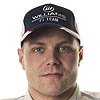
For 2013, Maldonado is retained while Valtteri Bottas is promoted to the full race seat. However, on January 21, the team was rocked by the news that Executive Director Toto Wolff, a shareholder in the company and assistant Team Principal was leaving to join Mercedes. Though the Austrian retains his shareholding in the Grove team it is a body blow to Sir Frank and his men.
On the same day that Wolff left Grove, Marussia announced that it was tearing up its contract with Timo Glock due to "tough economic conditions". Gradually Planet Paddock is facing up to the harsh reality of what the rest of us already knew, that these are difficult times. There is an icy wind blowing down the pitlane, and one cannot help but feel that Williams could go the way of so many legends, names such as Brabham and Lotus, before it.
Statistics - at the end of the 2012 Season
Drivers' Titles: 7
Constructors' Titles: 9
Seasons in F1: 38 (and 2 as Iso)
Grand Prix: 604
Wins: 114
Poles: 127
Fastest Laps: 131
Best result in 2012: 1st (Maldonado - Spain)
Best qualifying 2012: Pole (Maldonado - Spain)
Worst qualifying 2012: 18th (2 times)
2012: Maldonado out-qualified Senna 18 times
2012: Senna out-qualified Maldonado 2 times
2012: Completed: 1997 out of 2384 laps (83.8%)
2012: Finished 33 times from 40 starts (82.5%)
Management
Team Principal & Co founder: Sir Frank Williams
Co founder: Patrick Head
Deputy Team Principal: Claire Williams
Chief Executive Officer: Alex Burns
General Counsel: Mark Biddle
Finance Director: Louise Evans
Technical Director: Mike Coughlan
Senior Operations Engineer: Dominic Harlow
Chief Designer: Ed Wood
Chief Aerodynamicist: Jason Somerville
Chief Race Engineer: Xevi Pujolar
Race Engineer Car No 16: Andrew Murdoch
Engine Engineer Car No 16: David Lamb
Data Engineer Car No 16: Xavier Marcos
No 1 Mechanic Car No 16: Mark Pattinson
Race Engineer Car No 17: Jonathan Edolls
Engine Engineer Car No 17: Laurent Debout
Data Engineer Car No 17: Willmar Franssen
No 1 Mechanic Car No 17: Toby Brown
Chief Mechanic: Carl Gaden
Race Team Coordinator: James Broughton
Race & Test Team Manager: Dickie Stanford
Technical Specifications
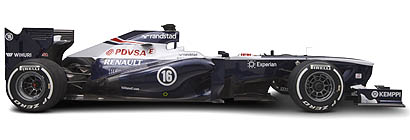
WilliamsF1 FW35
Chassis construction: Monocoque construction laminated from carbon epoxy and honeycomb surpassing FIA impact and strength requirements
Front suspension: Double wishbone, push-rod activated springs and anti-roll bar
Rear suspension: Double wishbone, pull-rod activated springs and anti-roll bar
Transmission: Williams F1 seven speed seamless sequential semi-automatic shift plus reverse gear, gear selection electro-hydraulically actuated
Clutch: Carbon multi-plate
Dampers: Williams F1
Wheels: RAYS forged magnesium
Tyres: Pirelli, Fronts: 245/660-13, Rears: 325/660-13
Brake system: AP 6 piston calipers all round, carbon discs and pads
Steering: Williams F1 power assisted rack and pinion
Fuel system: ATL Kevlar-reinforced rubber bladder
Electronic systems: FIA SECU standard electronic control unit
Cooling system: Aluminium Oil, Water, KERS, and gearbox radiators
Cockpit: Six point driver safety harness with 75mm shoulder straps & HANS system, removable anatomically formed carbon fibre seat
Dimensions & weight
Weight: FIA Minimum
Overall length: 5000mm
Overall height: 950mm
Overall width: 1800mm
Renault RS27-2013
2.4L V8, 900 V angle, 32 valves, aluminium block and pistons, nitrided alloy steel crankshaft with tungsten alloy counterweights, titanium connecting rods, 8 butterfly throttle system, 18000 rpm maximum speed
KERS: Williams F1 battery, MGU and electronics
|